Decaf Is Not Coffee With Something Missing
The word sounds subtractive, and that is most of the image problem. Decaf gets ordered apologetically, the way people order a salad at a steakhouse, and it carries a reputation earned decades ago by coffee that genuinely was not very good.
What is actually happening is more interesting. Caffeine is a single molecule, naturally occurring in the green coffee seed, and the entire craft of decaffeination is getting that one molecule out while leaving the several hundred compounds that make coffee taste like coffee exactly where they are. Nobody does it perfectly. The methods differ almost entirely in how close they get.
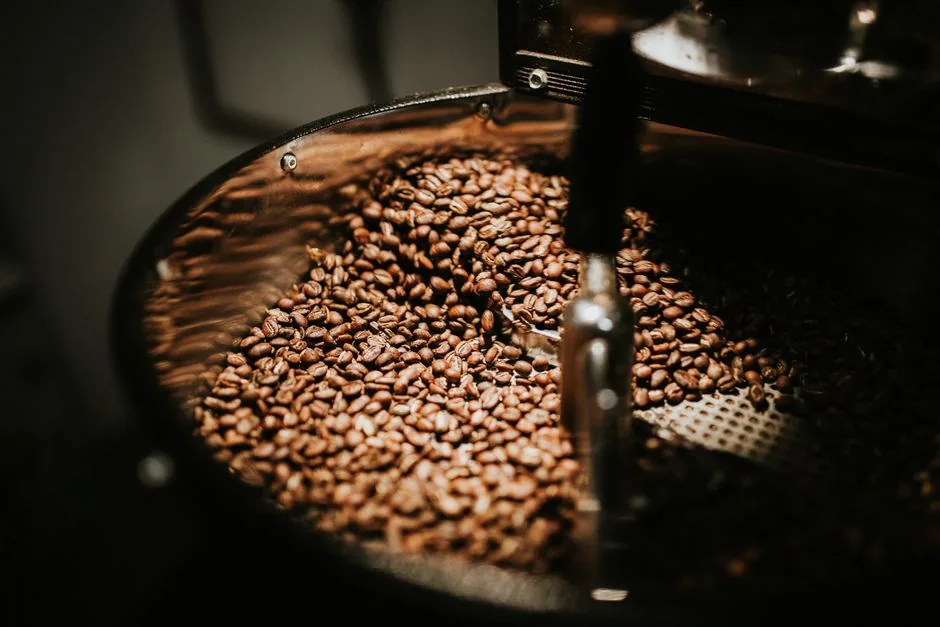
One fact worth fixing in your head before anything else: decaffeination always happens before roasting, on raw green beans, usually at the port of origin or at a dedicated facility. By the time a bag reaches a roaster, the caffeine question has already been settled. Roasting does not remove caffeine, and no amount of brewing technique at your kitchen counter will.
Every method starts the same way: swell the bean with water so the caffeine can move. What happens next is the whole argument.
The Four Ways Caffeine Comes Out of a Bean
Green coffee is hard, dry and closed. Step one in every process is soaking or steaming the beans until they open up and the caffeine inside becomes mobile. From that shared starting point, the industry splits four ways.
Methylene Chloride, the Workhorse
The oldest surviving method uses methylene chloride as a solvent, either applied directly to the soaked beans or, more commonly now, to the water the beans were soaked in. The appeal is selectivity. Methylene chloride binds caffeine far more readily than it binds the flavor compounds around it, so you lose less character than a cruder solvent would cost you.
It is also the method people worry about, which is fair enough given the name. The FDA caps residual methylene chloride in roasted decaf at 10 parts per million, and testing typically finds far less, often nothing detectable at all. The chemistry helps: the solvent boils at roughly 104 degrees Fahrenheit, and the beans then go into a roaster that climbs past 400. If that still bothers you, the next three methods exist.
Ethyl Acetate, or Sugarcane Decaf
Ethyl acetate is a compound found naturally in ripening fruit, and it can be derived from fermented sugarcane, which is why coffee processed this way is often labeled sugarcane decaf or natural decaf. It is common in Colombia, where the sugarcane is local and the logistics make sense. The flavor signature tends toward slight sweetness and a softer body, which some people love in a decaf and others find rounds the edges off too much.
The Swiss Water Process
This is the method that gets named on the bag, because it is the easiest to explain and the easiest to feel good about. There is no solvent at all. Instead, a batch of green coffee is soaked until the water holds a full load of everything coffee contains, caffeine included. That liquid is then run through carbon filters sized to trap caffeine and let the rest pass. What comes out the other side is water saturated with coffee flavor but empty of caffeine.
Soak a fresh batch of beans in that liquid and chemistry does the work. The flavor compounds have nowhere to go, since the water around them is already saturated, but the caffeine still has somewhere to move. It migrates out, the water is filtered again, and the cycle repeats until the beans are about 99.9 percent caffeine free. Slower and more expensive, which is exactly why roasters advertise it.
Carbon Dioxide Under Pressure
Pressurize carbon dioxide hard enough and it stops behaving like a gas and starts behaving like a liquid that can flow through a bean. In that supercritical state, CO2 is remarkably good at grabbing caffeine molecules and ignoring the larger flavor molecules around them. The caffeine is separated out and the CO2 is reused. Efficient, clean and capital-intensive, which makes it the choice for very large batches rather than small specialty lots.
How Much Caffeine Is Actually Left
Decaffeinated does not mean caffeine free, and the labeling rules say so. In the United States, coffee qualifies as decaffeinated once at least 97 percent of the caffeine has been removed. The European standard is tighter, and the Swiss Water Process routinely clears both by a comfortable margin.
In the cup, that translates to roughly 2 to 5 milligrams of caffeine in a standard mug of decaf. For comparison, the same mug of regular drip coffee usually lands somewhere around 95 to 165 milligrams depending on the beans, the grind and the ratio, which we broke down in more detail in our guide to how much caffeine is in your coffee. A square of dark chocolate is in the same neighborhood as a decaf. So is a cup of decaffeinated tea.
Why Decaf Used to Taste Bad
The reputation was deserved once. Three things went wrong, and only one of them had anything to do with the decaffeination itself.
The process does cost you something. Pulling caffeine out takes a handful of other soluble compounds with it, and the result is usually a cup with slightly less complexity and a shorter finish than the same bean with its caffeine intact. That is real, but it is small.
The second problem is roasting. Decaffeinated green beans come out of the process already partly browned and chemically altered, and they absorb heat differently. Roast them on the same profile you use for regular coffee and they darken too fast and scorch. For years, plenty of roasters did exactly that, because decaf was an afterthought rather than a product.
The third problem still bites today: freshness. Decaf sells more slowly than regular coffee everywhere, so the bag on the shelf has usually been sitting longer. Stale coffee tastes flat whether or not it has caffeine in it, and decaf has been taking the blame for staleness for fifty years.
Source good green coffee and profile the roast separately, and modern decaf is a legitimately good cup. Specialty roasters now treat it as a real product rather than a courtesy, which is why the gap between the best decaf and the best regular coffee has never been narrower. It is the same reason we pay attention to who roasts the coffee we pour.
The Case for an Evening Coffee
Caffeine has a half-life in most adults of roughly five to six hours, which means a cup at 4 PM still has half its caffeine working on you at around 10 PM, and a quarter of it past midnight. A study in the Journal of Clinical Sleep Medicine found that a substantial dose of caffeine taken six hours before bed measurably reduced total sleep time, even in people who reported sleeping fine.
That is the real argument for decaf, and it has nothing to do with being cautious. Coffee is not only a stimulant. It is a warm drink, a reason to sit somewhere, a thing to hold while you talk to somebody. Giving all of that up at 2 PM is a bad trade when the molecule is the optional part.
Which matters here specifically, because our counter is open until 9 PM every night of the week, in a neighborhood where options thin out fast after 5 PM. An evening cup a block up from the waterfront is a good way to end a day, especially after a walk along the promenade. Decaf is what lets you have it and still sleep. If caffeine-free appeals but coffee does not, the Rishi tea selection includes herbal blends that were never caffeinated to begin with.
How to Order It Without Apologizing
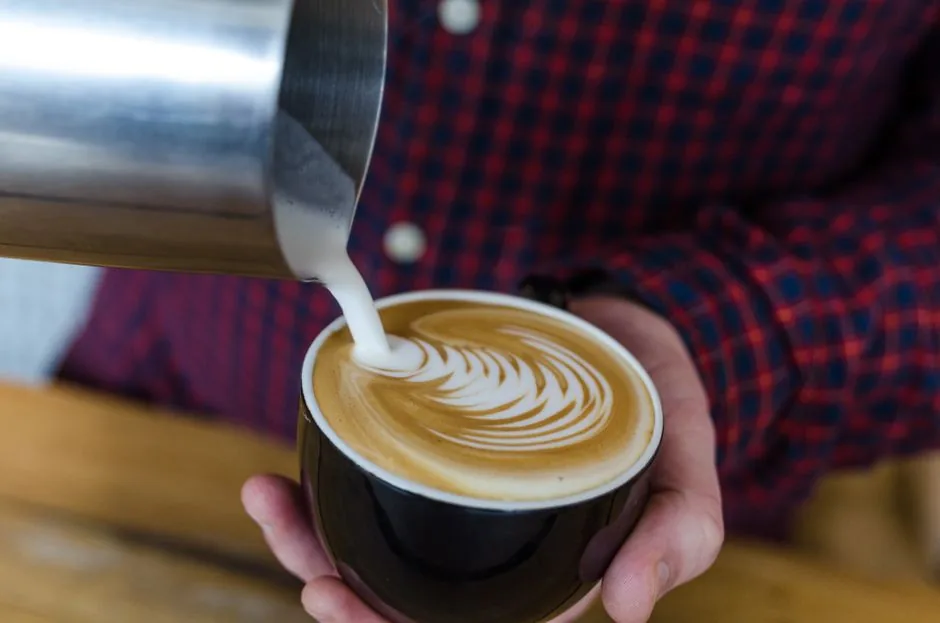
Decaf espresso is a normal thing to ask for and makes a perfectly good cortado, cappuccino or latte. Milk drinks hide the small flavor cost of decaffeination better than black coffee does. If you drink it black, it is reasonable to ask how long the pot has been sitting.
Half-caf is a legitimate order, not a hedge. Splitting a drink between regular and decaf shots lands you in the 40 to 80 milligram range, which for a lot of people is the sweet spot for a late-afternoon cup.
Pier 69 Market is at 10 Bay Ridge Ave, one block up from the water, open 6 AM to 9 PM on weekdays and 7 AM to 9 PM on weekends. To confirm what is available on a given day, including decaf and caffeine-free options, call (718) 777-6969. For larger orders, the catering page covers how we usually handle quantities and timing, and delivery runs through GetSauce.
An Evening Coffee, Minus the Three AM Ceiling Stare
La Colombe coffee and Rishi tea at 10 Bay Ridge Ave, one block up from the Bay Ridge waterfront. Open 6 AM weekdays, 7 AM weekends, until 9 PM. Delivery through GetSauce.