The Strongest Cup Is Rarely the One You Think
Ask ten people at the counter which drink has the most caffeine and most will say espresso. It is the one that tastes like it should: dark, small, bitter, drunk standing up.
It is also, per drink, one of the lighter things you can order. A single shot is about an ounce of liquid. A medium cold brew is sixteen ounces brewed at a deliberately high ratio of grounds to water. The shot is stronger by concentration; the cold brew wins by volume, and volume is what ends up in your bloodstream.
We pour La Colombe coffee and Rishi tea at Pier 69 Market on 10 Bay Ridge Ave, and this comes up at the register most mornings, usually as some version of "what should I get if I don't want to be up all night." Here is the honest answer, numbers and caveats included.
A Word About These Numbers
Caffeine content is a range, not a spec. Roast level, grind, water temperature, brew time and cup size all push the number around. Published figures tend to agree on the ballparks below, and the ballparks are what matter when you are choosing a drink. We do not lab-test individual cups, and nobody reputable does.
Concentration is what you taste. Volume is what keeps you up.
Typical Caffeine, Drink by Drink
Drip Coffee
An 8 oz cup of brewed coffee generally runs in the neighborhood of 80 to 120 mg. This is the baseline everything else gets measured against. Scale it up: a 16 oz is roughly double. That is the whole math.
Cold Brew
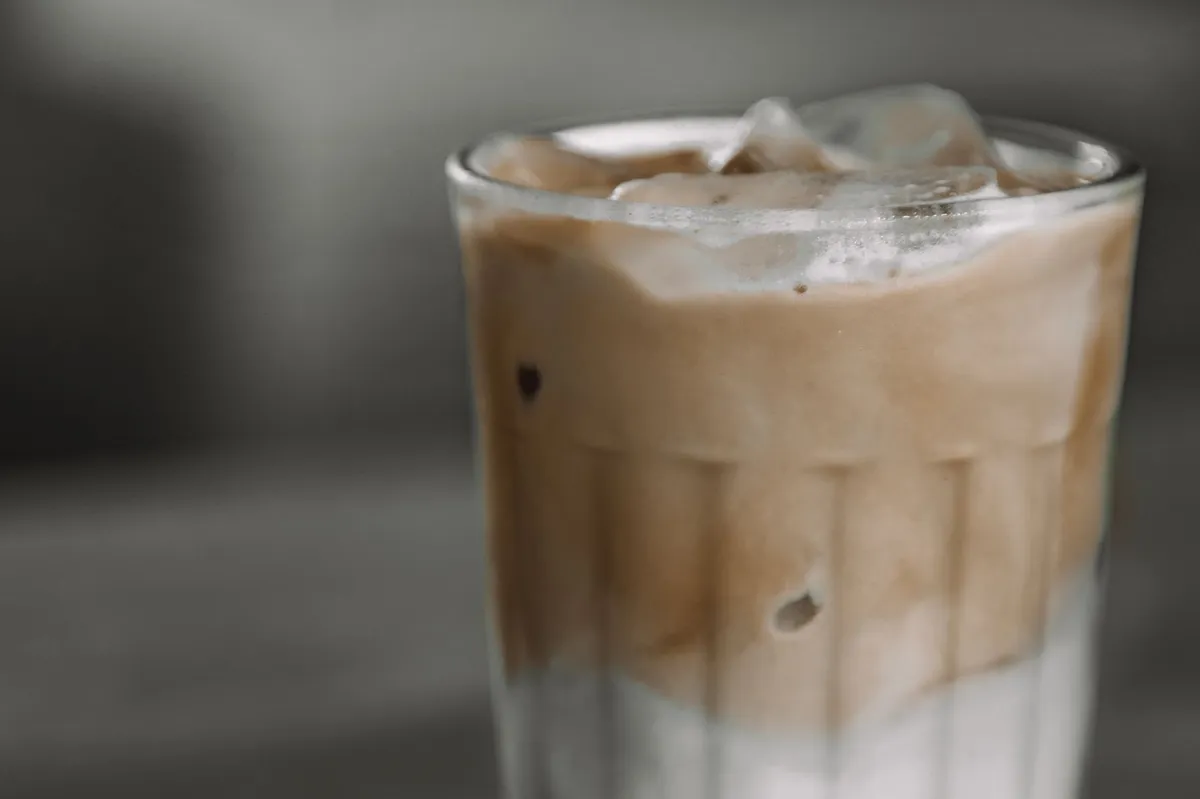
The heavy hitter. Cold brew is steeped for many hours in cold water, which requires a much higher coffee-to-water ratio to extract properly, so the resulting liquid is more caffeinated per ounce than drip even before you consider size. Add that cold brew is almost always ordered large and over ice, and a single cup can land at two to three times a small hot coffee. Our guide to cold brew on tap covers how it is made, and cold brew versus iced coffee explains why iced coffee, which is just brewed coffee chilled, is the gentler of the two.
Espresso and the Espresso Family
A single 1 oz shot typically holds about 60 to 75 mg. That one number explains the entire espresso menu:
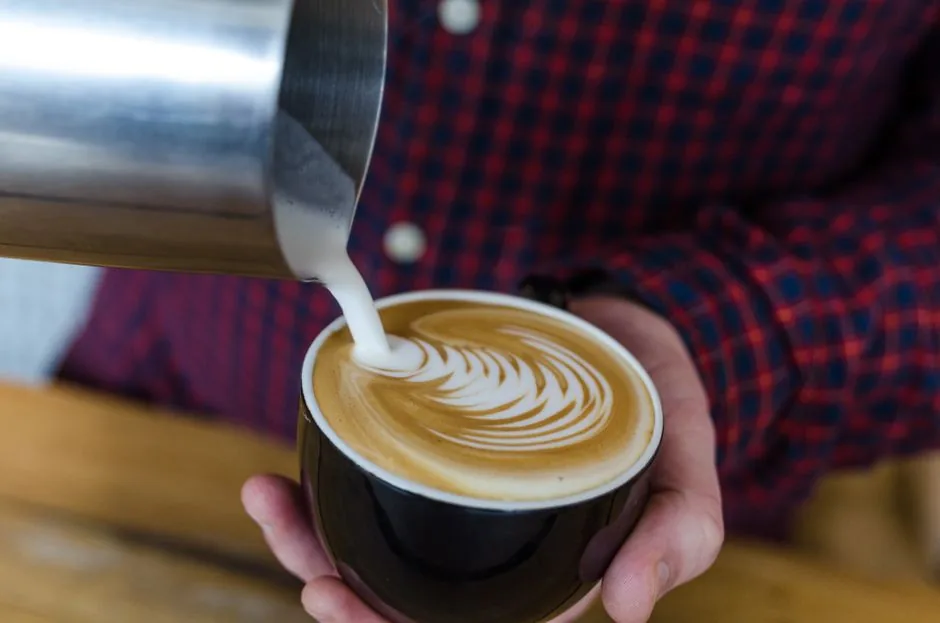
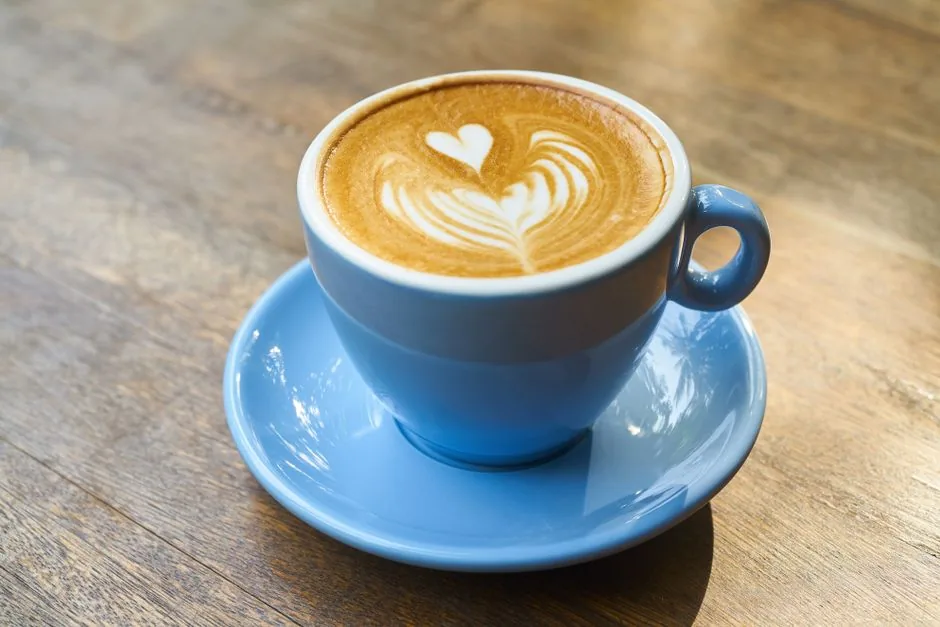
- Cortado, flat white, cappuccino, latte. Built on one or two shots. A single-shot version of any of them sits below a medium drip coffee. The difference between them is milk texture and ratio, not strength, which our breakdowns of cortado versus flat white and cappuccino versus latte get into.
- Americano. Espresso plus hot water. Tastes like a long black coffee, carries the caffeine of the shots that went into it and nothing more.
- Double shots. Two shots puts you in drip-coffee territory, around 120 to 150 mg. This is where most people actually live without realizing it.
If the espresso lineup itself is the mystery, our espresso drinks guide walks the whole board.
Matcha, Tea and Chai
All three sit well under coffee, which is exactly why they are useful. A matcha latte commonly lands around 40 to 70 mg, depending on how much powder goes in. Brewed black tea is often in the 40 to 50 mg range for 8 oz, green tea lower still, and a chai latte, built on black tea, usually runs around 30 to 50 mg. Herbal tea has none at all. Our matcha and tea drinks guide covers what we pour.
The Zero and Near-Zero Column
Hot chocolate carries a trace amount from the cocoa, on the order of a few milligrams, which is to say none in any practical sense. Smoothies and fresh juice have zero. If you want a drink in your hand on a waterfront walk and you have already had enough coffee for one day, that is the column to order from.
Why Cold Brew Feels Different, Not Just Stronger
Two things are happening at once. The dose is simply larger. And the delivery is slower: a hot 8 oz coffee is finished in fifteen minutes, while a 20 oz iced cold brew gets nursed over an hour at a table. The same caffeine spread over a longer window feels smoother, which is also how people end up well past their usual dose without noticing. Smooth is not the same as mild.
Ordering by the Clock
Caffeine has a half-life of roughly five hours in most adults, with real variation person to person. Half of a 4 PM cold brew is still with you at 9 PM. That single fact is more useful than any chart, and it is the reason the same drink is a good idea at one hour and a bad one at another.
We open at 6 AM Monday through Friday and 7 AM on weekends, and we are open until 9 PM every day, so there is a lot of clock to work with:
- 6 to 9 AM. Order whatever you want. This is the hour cold brew and large drip are built for, and it is the hour the early-morning coffee crowd heading for the NYC Ferry is working with anyway.
- Midday. A single-shot espresso drink or a second small coffee covers the slump without stacking another 200 mg on top of breakfast. If you are set up at a table for the afternoon, as the regulars in our cafes to work from guide are, the stacking is the thing to watch.
- 3 to 5 PM. The decision hour. If you are sensitive, this is where matcha, chai or tea earns its place on the menu.
- After 6 PM. Hot chocolate, herbal tea, a smoothie, or a single shot if you genuinely need it. Our notes on coffee open late in Bay Ridge cover the evening hours in more detail.
How Much Is Too Much
The FDA has said that for healthy adults, roughly 400 mg of caffeine a day is not generally associated with negative effects, which works out to about three to four 8 oz cups of brewed coffee. Guidance during pregnancy is lower, commonly cited at under 200 mg a day. Tolerance genuinely varies, and none of this is medical advice: if you have a heart condition, an anxiety disorder, a pregnancy or a prescription that interacts with stimulants, your doctor's number beats ours.
The practical version: one large cold brew is most of a day's allowance. Two is past it.
Cutting Caffeine Without Giving Up the Drink
Three levers, in order of how well they work.
Size. The least fun and most effective, and the only lever that works without changing what you ordered.
Shot count. Ask for a single where you would normally get a double. On a milk drink, most people cannot tell by taste and can absolutely tell by 10 PM.
Category. Switch from coffee to matcha, chai or tea and you have roughly halved it or better while still getting a hot drink and a reason to sit down. If you are after a specific low-caffeine option on a given day, the surest move is to ask at the counter or call (718) 777-6969, since what is pouring changes.
The Short Version
Espresso is the most concentrated thing on the menu and one of the lightest per drink. A large cold brew is the strongest cup you will carry out of almost any cafe, strong twice over: once from the brew ratio, once from the size. Drip coffee at about 80 to 120 mg per 8 oz is the ruler. Matcha and chai land near half a coffee. Hot chocolate, smoothies and juice are the evening answers. And with a half-life near five hours, the hour you order at matters as much as the drink.
Pier 69 Market is a waterfront cafe in Brooklyn at 10 Bay Ridge Ave, open 6 AM to 9 PM Monday through Friday and 7 AM to 9 PM on weekends, a short walk from Owls Head Park and the 69th Street Pier. See the full menu, check hours and directions, or browse what the neighborhood is pouring in our guide to the best coffee in Bay Ridge. Ordering for a crowd rather than yourself? Coffee catering is a different calculation, and we are happy to run it with you.
Pick Your Cup at the Waterfront
La Colombe coffee, Rishi tea, cold brew, matcha and more at 10 Bay Ridge Ave. Open 6 AM to 9 PM weekdays, 7 AM to 9 PM weekends. Call (718) 777-6969.